Does your dog gobble down their food without coming up for breath? Noticed that they are barely chewing and even choking on their kibble? However quickly they’re wolfing down their food, it’s probably led you to wonder ‘Why do dogs eat so fast?’
In this blog, we’ll take a look at this common question and see what the consequences are when it comes to quick eating, as well as ways you can help your dog to slow down when it reaches meal times. At Green Pantry, we have your dog’s wellbeing at heart – make sure to browse all of our natural dog recipes that are delicious and nutritious!
Dog eating too fast symptoms
If your dog is treating every meal time like a competitive eating challenge, it can actually become quite dangerous. When your dog is literally inhaling their food, they are also swallowing a significant amount of air, leading to quite a lot of physical symptoms.
Signs that your dog is eating too fast include:
-
- Gulping and slurping noises
- Choking or gagging
- Regurgitation – not to be mistaken with vomiting
- Excessive burping
If you notice any of the above, then it’s probably a sign that your dog needs to slow down!
What actually happens if my dog eats too fast?
But why can’t dogs eat fast? Well, as we mentioned above, there are some physical troubles that your dog can run into when wolfing down their food. The medical term for the air they swallow is aerophagia, and this can lead to issues ranging from mildly annoying to immediately life threatening.
This is what might occur…
Digestive distress
Regurgitation is the most common result, which is where your dog’s food might come back up almost exactly as it looked in the bowl. This could lead to choking, as large chunks of kibble might get lodged into their windpipe. Unfortunately for you, frequent farting or burping might also be a factor!
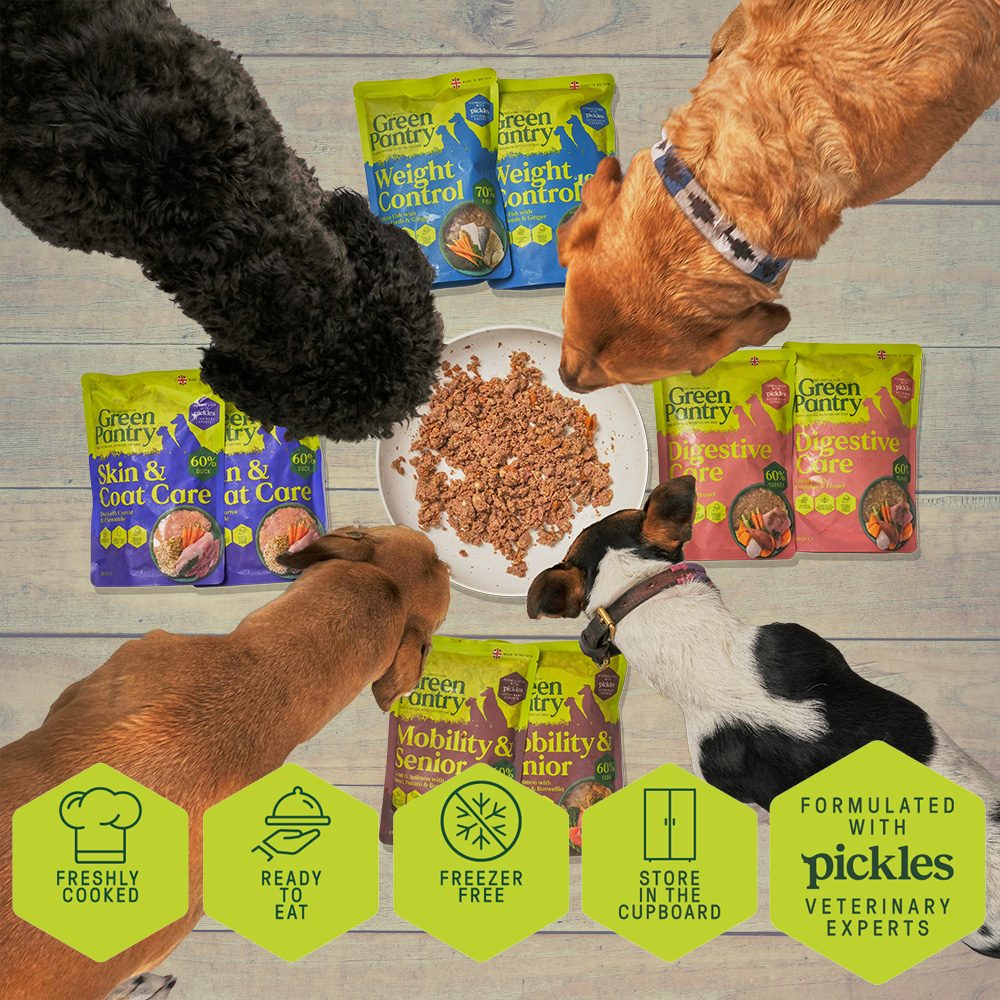
Here at Green Pantry, we sell natural digestive care dog food, made from nutritious ingredients that help to promote optimal digestion. It’s a great recipe if your dog suffers from indigestion, bloating, gas, diarrhoea, constipation, or any issues found from them eating too quickly.
The food bloat
Food bloat, or otherwise known as gastric dilation, occurs when the stomach becomes physically distended from a massive amount of food and air. This can be incredibly painful, and it might even look like your dog has swallowed a basketball! Keep an eye out if your dog looks lethargic and is reluctant to move. You might want to get in contact with your vet if symptoms worsen.
Poor nutrient absorption
It can be argued that digestion actually starts in the mouth, and then continues with the mechanical breakdown of food. When a dog is eating too fast, their stomach has to work much harder to break down large pieces of kibble. This can lead to softer stools, a result of the digestive system not having had the time to process the nutrients efficiently.
How to slow down fast eaters
So, keeping a close eye on quick eaters is incredibly important. And, getting them to slow down is even more crucial. But where do you start? Here are some of our top tips when it comes to slowing your dog down at dinner time
- Buy a puzzle feeder or special bowls – Puzzle feeders are a fun way to give your dog their meal, along with a simultaneous play session! You can also buy bowls with built in grooves or other obstacles that your dog has to work around to get their kibble.
- Serve smaller meals but more frequently – If your schedule permits, try feeding your dog smaller meals throughout the day so that they are gobbling up less food in one sitting. Be sure to read our dry food dog feeding guide for more information.
- Add feeding stations throughout your house – A variation on the above tip, try dividing your dog’s meal into several portions and placing them in different areas of your home. This way, your dog has time to breathe and digest what they’ve just eaten before moving onto the next station.
- Use dry kibble for training – Using kibble for training can also be a great way to monitor your dog’s eating speed. It can also provide a great opportunity for bonding and playing!
Keep your dog healthy & happy with Green Pantry’s tasty recipes!
Hopefully, this blog has answered your burning question ‘Why do dogs eat so fast?’ While many dogs are known for guzzling down their meals, with some of the tips above and a little more control, you can help your dog slow down their eating and actually enjoy those tasty flavours in their dinner!
At Green Pantry, we take your dog’s diet seriously. We’re big believers in natural nutrition, and all of our recipes are made from 100% natural ingredients that target specific health functions and dietary requirements. So, whether you’re after specific pancreatitis dog food or grain-free dog food, we’ve got it all.
Need more advice when it comes to your dog’s diet? Get in touch with us today!
Why is my dog eating so fast: FAQs
Can dogs throw up from eating too fast?
Yes, your dog can vomit or regurgitate their food if they are eating too quickly. However, choking is the main concern. If your dog is throwing up the food that they haven’t chewed properly, they can choke on these bits that are stuck in their throat.
Can a dog eating too fast cause diarrhoea?
Yes, your dog can also suffer from diarrhoea if they’re eating too quickly. This is because their digestive system is overwhelmed by the speed or volume of intake. However, a more serious effect of eating too fast is that it can increase your dog’s risk of developing gastric dilatation and volvulus (GDV). Without immediate veterinary care, it can be fatal.
Why is my dog eating grass really fast?
While your dog eating grass might create a cause for concern, the reality is that grass eating is actually quite a normal behaviour for most dogs. If they are eating grass frantically or at high speed, it’s usually a biological reflex related to stomach discomfort. Your dog might be feeling nauseous, or it might even be a sign of fibre deficiency. Make sure you check out our high fibre dog food!