
As a dog owner, you probably understand the importance of a healthy diet. However, there is often one crucial component that can be overlooked in their bowl, and that is fibre for dogs.
Fibre actually plays a pretty crucial role in your dog’s overall health and happiness, from promoting smooth digestion to boosting gut immunity. Here at Green Pantry, we’ve got our own high-fibre natural dog food recipes that are perfect for incorporating more fibre into your dog’s diet.
In this blog, we’ll dive into the benefits of fibre and what sources of fibre is good for dogs, including some of our tasty, natural recipes. Let’s get started!
Why is fibre good for dogs?
We all know that fibre is good for our diet, in humans as well as pets. Essentially, fibre is great for the gut and helps ensure that it works properly. It helps to regulate digestion and promotes healthy, regular stools, preventing diarrhoea or constipation. It can also help with weight management and blood sugar control!
Here are some more advantages of a high-fibre diet for your dog:
- Better stool quality
- Nourishing the gut from the inside out
- Helps to keep your dog feeling full for longer without adding excess calories
- Regulates blood sugars, particularly beneficial for dogs with diabetes
But what actually is fibre? Dietary fibre is a type of complex carbohydrate found naturally in the plants that we, and our dogs, eat. Fibres known as insoluble fibre don’t get digested in our small intestine like other starches. Instead, it’s partially broken down by bacteria in our large intestine before passing through in our poo.
How to tell if your dog isn’t getting enough fibre
Understanding when your dog needs more fibre can be tricky, but we’ve got some common signs you should look out for:
- Bowel issues – If your dog is constipated, they might not be getting enough fibre. Similar to if your dog has diarrhoea or bloody stools. (Always speak to your vet if you’re concerned about your dog’s stool quality.)
- Scooting – If your dog is rubbing or dragging their bottom across the floor, then it might be a sign of an anal gland problem, usually caused by a lack of fibre.
- Eating grass – There are many reasons why your dog is eating grass, and not getting enough fibre can be one of them. They might be reaching for the most readily available source of fibre they can get by instinct.
- Overeating – If your dog is always begging for more food and is gaining more weight as a result, it might be that the balance of fibre in their diet is off. Fibre helps your dog to feel full for longer, so begging shouldn’t be a recurring behaviour.
What fibre is good for dogs?
Dogs therefore need a healthy diet that contains all the right fibre. Foods like oats, wholegrains, and brown rice are great sources of fibre for dogs, as well as vegetables like broccoli and carrots. The best way for your dog to digest more fibre is through their diet, and luckily for you, that’s where Green Pantry comes in.
Some older dogs might need more fibre, as they are more prone to constipation. A lot of older dogs are also less active, so a fibre-rich diet can help them to maintain a healthy weight by feeling fuller for longer.
Discover our natural senior dog food recipes that have been specifically tailored for older dogs with health issues and complications.
Trust Green Pantry’s 100% natural recipes
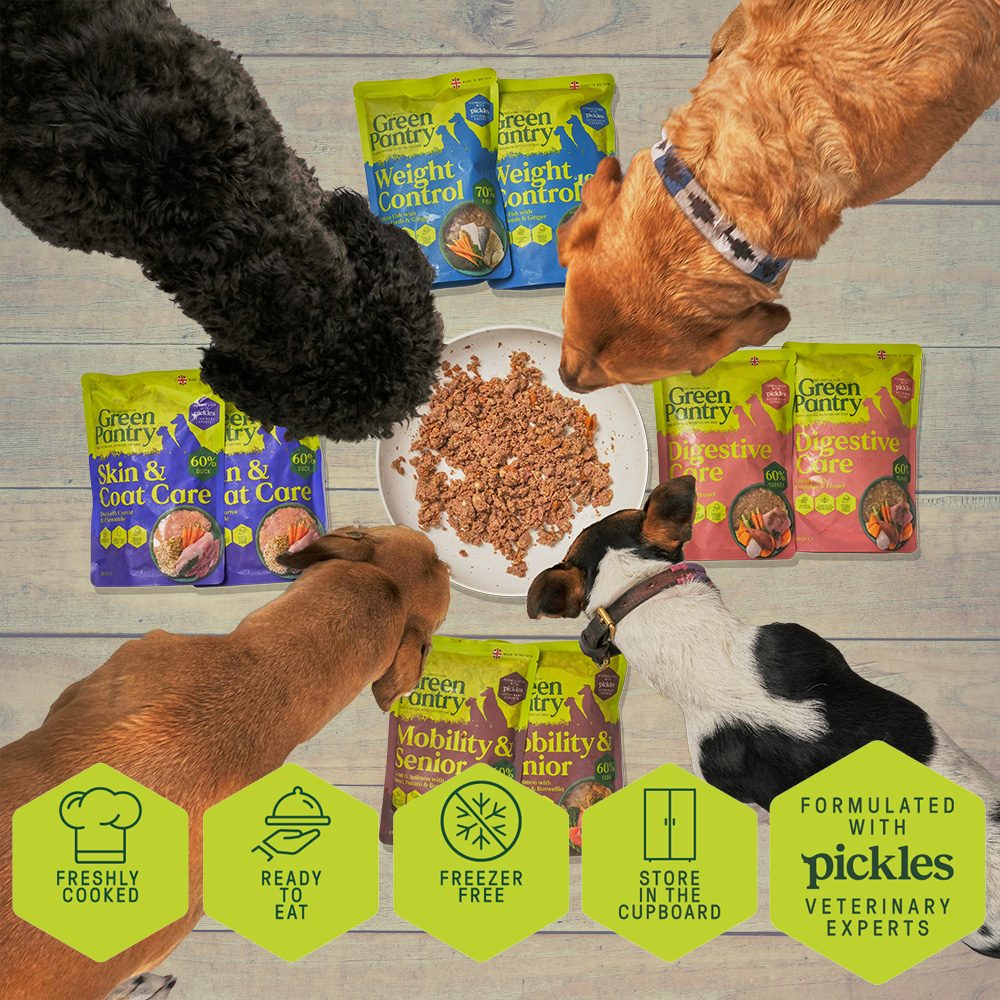
One of the best ways to increase the fibre intake for dogs is by changing their diet. If you want to put your dog onto a high-fibre diet, you’ve come to the right place. All of our recipes are made from 100% natural ingredients, whether you shop our dry kibble recipes or fresh dog food.
Specifically, our recipes that feature high-fibre ingredients include:
- Turkey with Mint & Parsley
- Trout with Salmon, Lentils, & Spinach
- Duck & Turkey with Sweet Potato & Blueberry
- White Fish with Kale & Beetroot
- Lamb with Cranberry and Turmeric
Each recipe is packed full of nutritious and delicious ingredients, working together to nourish your dog from the inside out. Some ingredients we use that are particularly high in fibre include:
Brown rice – Packed full of fibre, it can aid better digestion and keep your dog feeling fuller for longer.
Oats – Oats are also a great source of soluble fibre. They are naturally gluten-free and have a very low risk of triggering food allergens.
Sweet potato – Sweet potatoes are exceptionally high in dietary fibre, helping to add bulk to your dog’s stools, a great natural remedy for dogs who suffer from diarrhoea.
Lentils – You might not know it, but lentils are packed full of soluble and insoluble fibre. The soluble fibre is highly fermentable, meaning that it’s also an outstanding prebiotic, directly benefiting your dog’s gut.
Want to see what goes into each of our recipes? Discover what’s in the pantry and see how each ingredient looks before it’s transformed into our tasty recipes.
Discover high-fibre recipes right here at Green Pantry
Hopefully, you’re now aware of the importance of fibre for dogs. Ensuring that your dog gets the right amount of fibre isn’t just about avoiding digestive hiccups, but it’s about giving them the energy and comfort that they need to thrive!
At Green Pantry, we’ve been developing natural dog food recipes that target specific health functions and dietary needs for nearly 20 years. So, whether you’re looking for high-protein dog food or pancreatitis dog food, browse all of our recipes and find the right one for your furry friend.
Got any questions about our recipes? Get in touch with a member of our team – They’ll be more than happy to speak to you!